Ageing in the Digital Era: Media Literacy, Participation and Critical Engagement
The MELISE International Conference explores ethics, inclusion and digital citizenship in later life
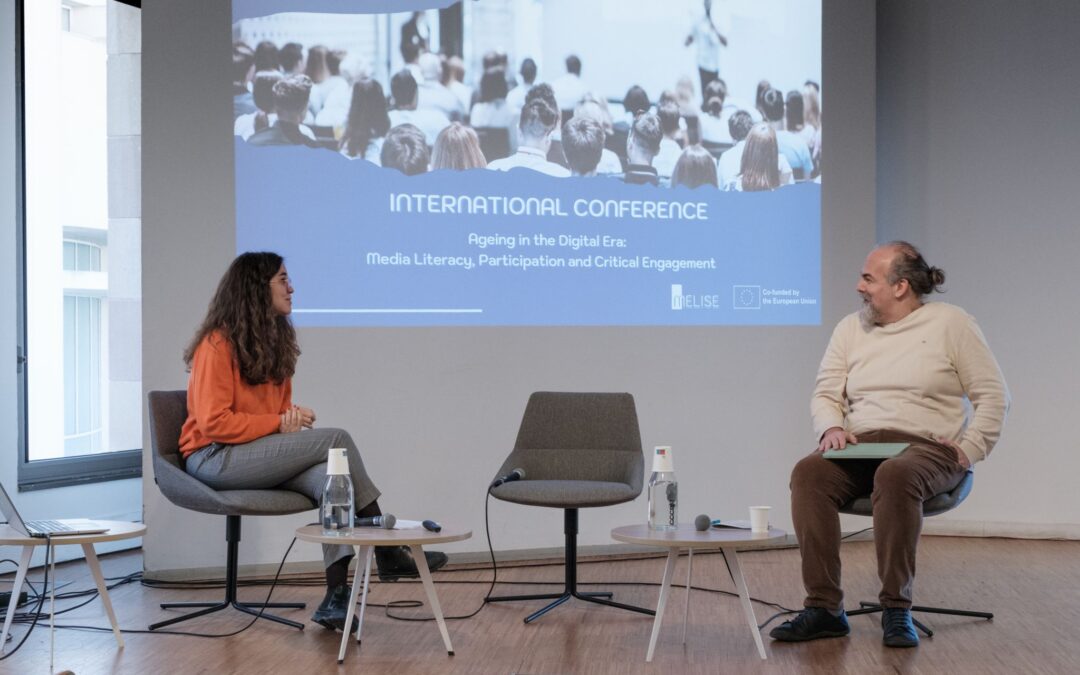
On 6 February 2026, the international conference “Ageing in the Digital Era: Media Literacy, Participation and Critical Engagement”, organised within the framework of the MELISE project, took place at the Centre de Cultura Contemporània de Barcelona (CCCB) in Barcelona in a hybrid format. The event brought together researchers, educators and media literacy practitioners from across Europe, both in person and online, to reflect on the challenges and opportunities of digital participation in later life.
Media literacy as a condition for digital citizenship and inclusion
The conference opened with a welcome address by Paula Estalayo (Ediciones Octaedro), who presented the MELISE project and framed media literacy as a key condition for digital citizenship and social inclusion. She emphasised that access to technology alone does not guarantee meaningful participation in democratic life, particularly in a context marked by disinformation and rapid technological change. Estalayo presented MELISE as an initiative aimed at supporting older adults in navigating digital environments with greater confidence, awareness and well-being.
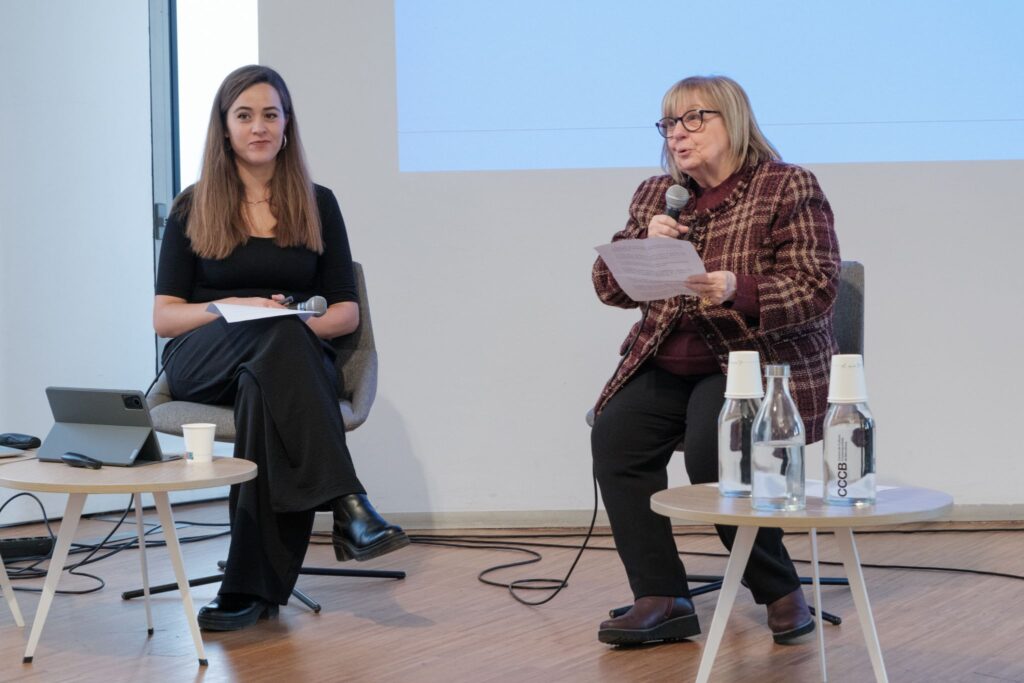
The opening session continued with remarks by Montserrat Amorós Coderch, Vice President of the International Association of Universities of the Third Age (IAUTA), who highlighted the importance of international cooperation in promoting inclusion and lifelong learning among older generations.
Nino: a simple and secure guide to the digital world
The first keynote, delivered online by Ilaria Gaudiello (Biblioteche Senza Frontiere), presented Meet Nino, the simple and secure guide to the digital world, an initiative designed to support older adults in navigating digital environments safely and confidently.
The project responds to demographic and social challenges affecting seniors, particularly their vulnerability to disinformation, cyber risks and digital exclusion. Combining a mobile application with training activities and local engagement, Nino aims to provide accessible guidance on the use of digital tools, personal data protection and the identification of false or misleading information. The initiative illustrates how community-based approaches and user-centred design can contribute to fostering autonomy and digital confidence among older adults.
Ethics, epistemic justice and intergenerational perspectives
The first panel, Ethics, Epistemic Justice and Intergenerational News Literacy, chaired by Isabel García (Cosicosa), explored the relationship between media literacy, trust and democratic participation across generations.

Anna G. Orfanidou (University of York, Europe Campus) questioned simplified generational narratives such as “digital natives” and “digital immigrants”, proposing instead a more nuanced understanding of how individuals position themselves within the contemporary news ecosystem. Drawing on empirical research, she argued that technical fluency does not necessarily correlate with critical engagement, and that trust, verification practices and media habits play a decisive role in shaping news consumption.
Pedro García Guirao (University of Málaga) addressed the ethical dimension of media literacy, focusing on how audiovisual media influence the public understanding of complex bioethical issues such as healthcare, ageing and end-of-life debates. He examined how misinformation, emotional framing and conspiracy narratives can contribute to forms of epistemic injustice, particularly affecting seniors participation in public discourse. Both contributions underscored that media literacy involves ethical reflection and critical judgement, not merely technical competence.
Rethinking literacy through situated media encounters
The second keynote, Rethinking Literacy from the ‘Posts’: Intra-actions and Affects in Situated Media Encounters, delivered in person by Silvia de Riba (University of Girona) and chaired by Paula Estalayo, proposed a rethinking of literacy through the lens of everyday media encounters. Drawing on theoretical approaches that emphasise “intra-actions” and affective dimensions, she examined how emotions, social contexts and embodied experiences shape how older adults interpret and engage with digital content.
Her intervention highlighted the importance of designing educational initiatives that take into account the relational and situated nature of media practices, expanding the understanding of literacy beyond cognitive or functional skills.
From lifelong media education to functional digital skills
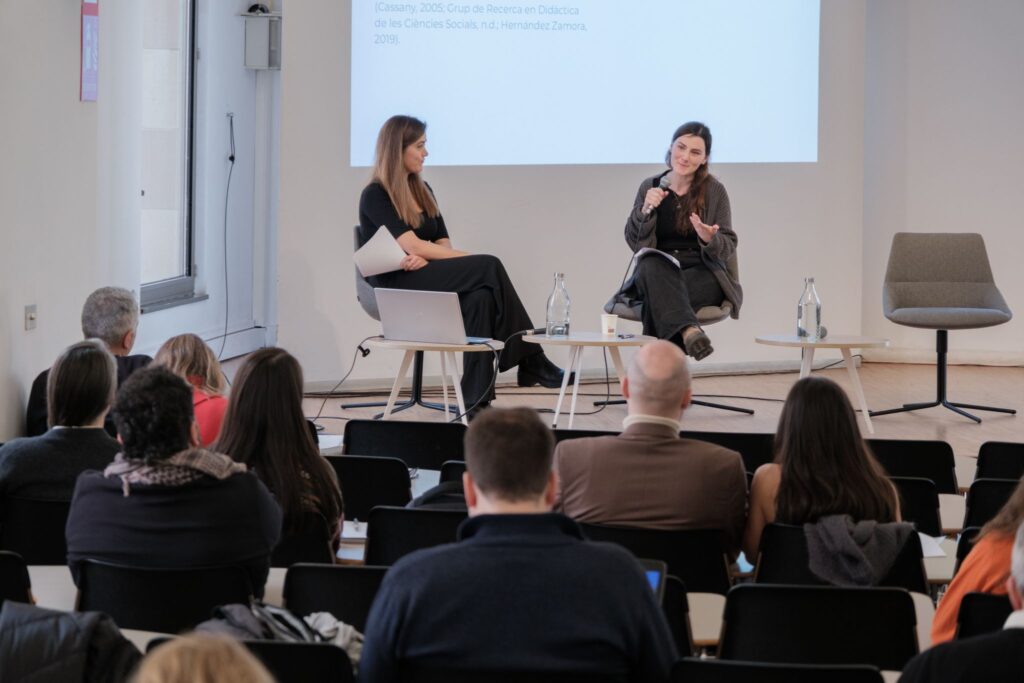
The second panel, Teaching Media Literacy to Seniors: From Lifelong Media Education to Functional Skills, chaired by Cristina Valero (Cosicosa), focused on pedagogical strategies and project-based experiences.
Margarida Maneta (Lusófona University, CICANT) presented research on media literacy initiatives for older adults in Portugal, emphasising participatory methodologies and the diversity of digital practices among seniors. Katerina Chryssanthopoulou (Ionian University, Greece) introduced the BUBI EU project, which develops educational modules aimed at strengthening functional media literacy skills, including understanding online information, managing digital services and identifying misinformation. Both contributions stressed the need for confidence-building approaches, co-creation and sustainable frameworks for lifelong learning.
Ageing, participation and critical engagement
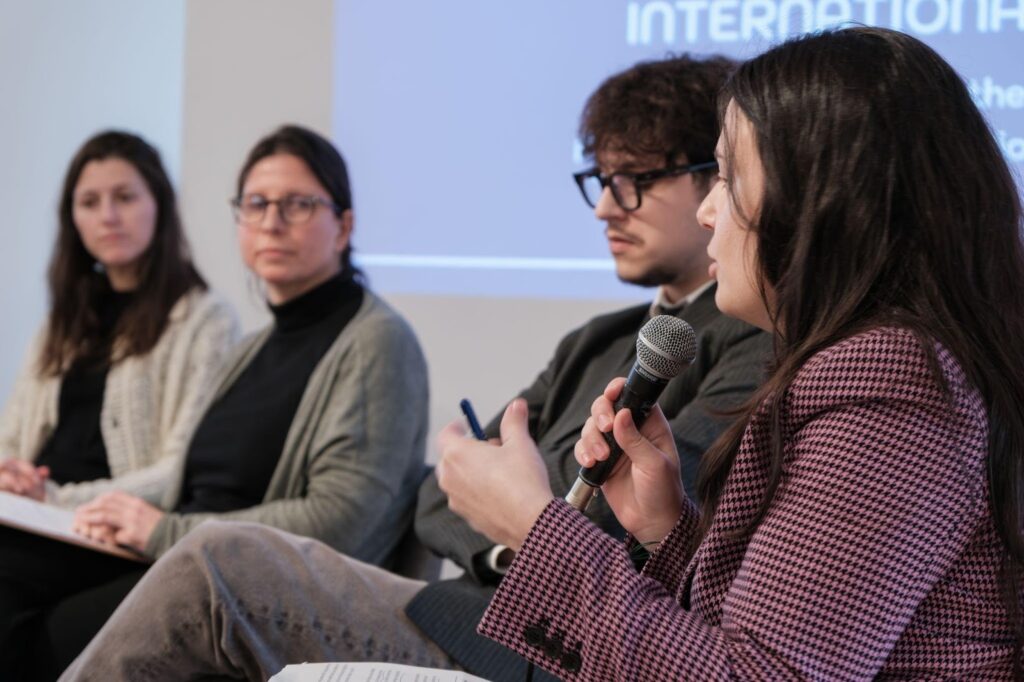
The roundtable discussion, chaired by Apostolos Karampaglidis (AUTH), brought together representatives from journalism, academia and civil society, including Alba Tobella (Verificat), Cristina Fernández (UVIC), Anna Blázquez Abella (Fundació Pere Tarrés) and George Rambotas (AUTH).
The discussion addressed the emotional and cognitive challenges older adults face in digital environments, including exposure to misinformation, online scams and rapidly evolving platforms. Participants emphasised the importance of intergenerational learning, safe and supportive educational spaces, and long-term strategies that embed media literacy into everyday life. Particular attention was given to confidence-building, peer support and the need to adapt methodologies to diverse social and educational backgrounds.
Towards sustainable and inclusive media literacy
The conference concluded with closing remarks by Isabel Nery (Associação Literacia para os Media e Jornalismo), who synthesised the key themes of the day. She underlined the fragility of trust in contemporary information ecosystems and the need for continuous media literacy across the lifespan.
The event reaffirmed that promoting digital inclusion among older adults requires not only technical training but also ethical reflection, emotional awareness and sustained institutional commitment. By fostering dialogue between researchers, educators and practitioners, the MELISE conference contributed to advancing a more inclusive and critically engaged digital society.